
Signed documents · GDPR anonymization
Electronic signature
Anonymize electronically signed documents without losing workflow control: detection when enqueueing, operator cues, integrity checks and re-signing of the result when the process allows it.
Exact scope depends on your plan and signature type. Ask Politeia Soft about conditions for your organization.
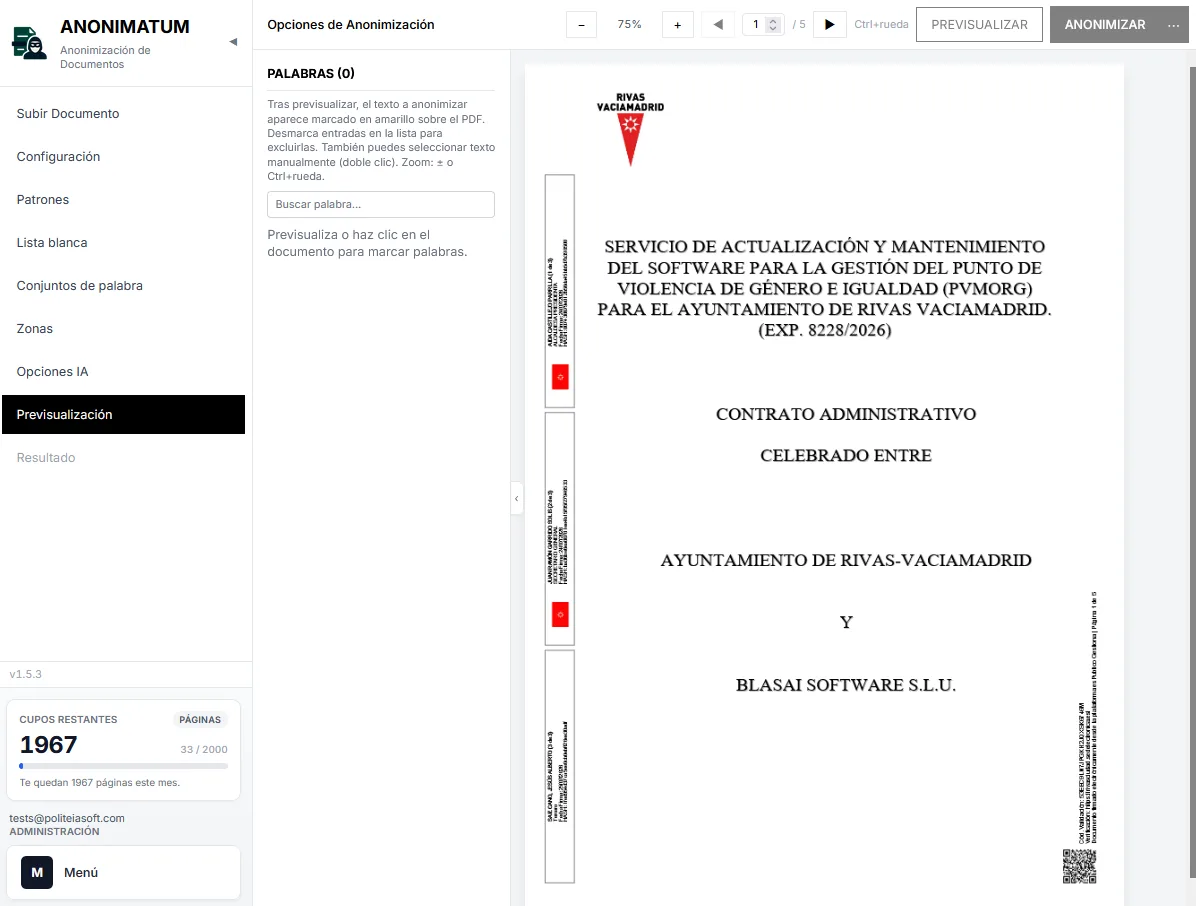
Imagen pendiente
public/images/marketing/signature/hero.webp
Electronic signature UI: signed PDF detection / warning.
1600×900 WebP
Why it matters in anonymization
When a PDF already carries an electronic signature, anonymizing is not only covering data: you must respect the signature lifecycle, warn operators and — when the process allows it — re-sign the result so the document remains usable in formal circuits.
Anonimatum integrates cues and checks in batch flows: it detects signed PDFs when enqueueing, informs you before processing and verifies integrity at the process points that apply.
We do not claim universal compatibility with every signature scheme on the market: scope is defined with Politeia based on your version and use cases (public sector, legal, archives).
How it fits the workflow
- 1
Detect when enqueueing
When preparing a batch, the system identifies signed PDFs and shows warnings so the team can decide how to proceed.
- 2
Anonymize with control
Personal-data detection and redaction (patterns, word sets, contextual AI) run with preview when the flow supports it.
- 3
Verify and re-sign
When the process allows it, integrity is checked and the result is re-signed to keep usefulness in signed circuits.
Signature capabilities in Anonimatum
Detection and cues
The system automatically detects signed PDFs when enqueueing a batch and warns you before processing, avoiding surprises in large remittances.
Re-signing the result
When the process allows it, the anonymized document is re-signed to keep electronic signature validity in the downstream circuit.
Signature verification
Integrity checks on signed PDFs before and after anonymization, according to your plan scope.
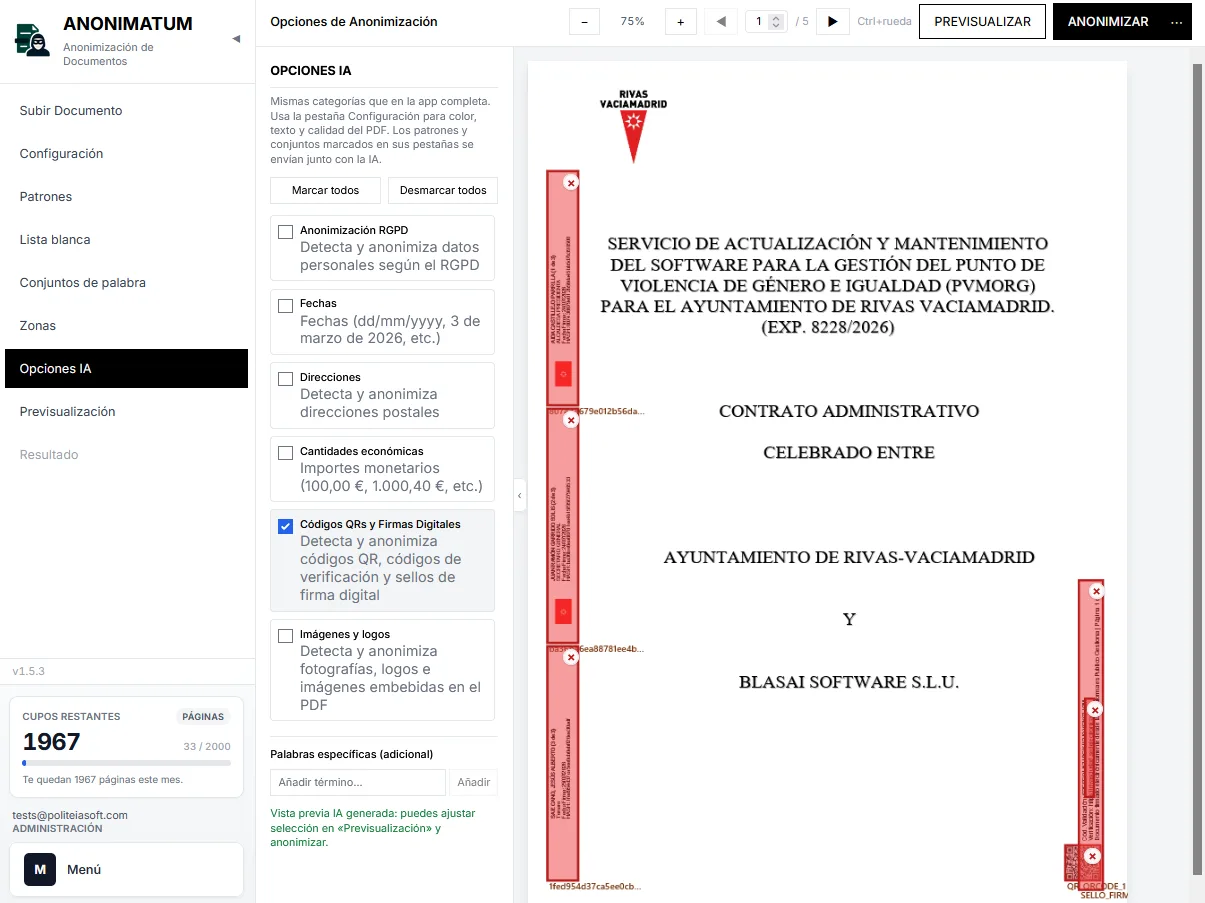
Imagen pendiente
public/images/marketing/signature/verify.webp
Signature integrity verification in the flow.
1400×900 WebP
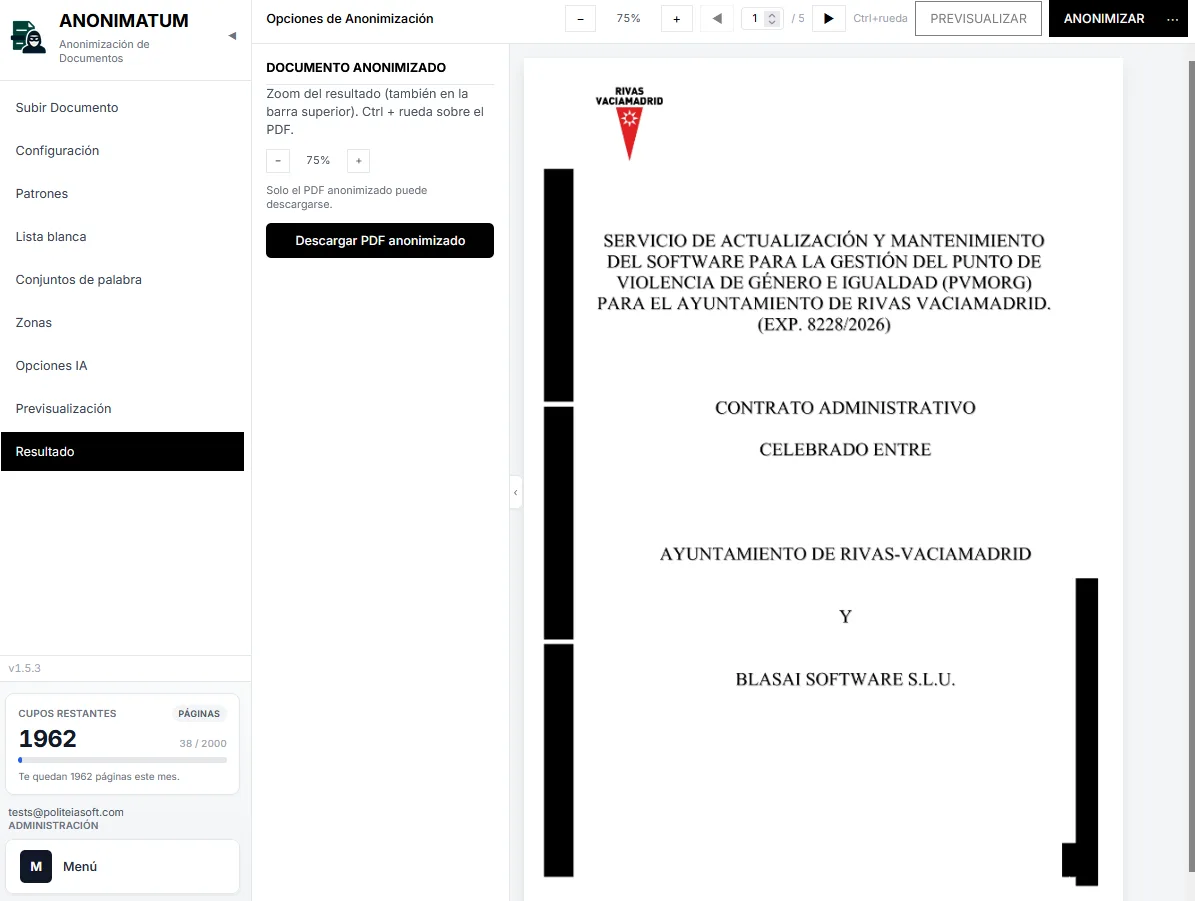
Imagen pendiente
public/images/marketing/signature/resign.webp
Re-signing the anonymized result when the process allows it.
1400×900 WebP
Advantages vs manual redaction on signed files
Manual black-box redaction on signed PDFs often breaks the signature or leaves recoverable text under black layers.
Operational warnings
Teams know which batch files carry signatures before launching mass processing.
Same EU platform
Anonymization and signature handling in the Anonimatum ecosystem, with processing in the European Union.
Batch coherence
Designed for remittances and server queues, not only a single desktop PDF.
Clear contractual scope
Agree with Politeia which signature types and scenarios your deployment covers — no generic promises.
Use cases
Signed administrative case files
Anonymize annexes or versions for transparency while keeping control of the signature flow.
Contracts and agreements
Prepare copies without personal data for third parties or archives, with prior detection of signed files.
Mixed batches
ZIP remittances with signed and unsigned PDFs: enqueue cues so they are not treated blindly the same way.
Integrity review
Check the signed document state at the process points defined in your plan.
FAQ
Does anonymizing a signed PDF always invalidate the signature?
Changing content usually affects the original signature. That is why Anonimatum detects signed files, warns operators and — when the process allows it — contemplates re-signing the result. Details depend on signature type and your plan.
Do you support every signature standard?
We do not claim universal coverage. Scope is defined with Politeia Soft based on your version, signature providers and use cases.
Is re-signing automatic on every batch?
Only when the process allows it and it is enabled in your configuration. Otherwise the system prioritizes detection and operational warnings.
Do documents leave the EU?
Anonimatum anonymization processing runs on European Union infrastructure, without relying on external LLM APIs for document content.
How do I start?
Request information or a demo from Politeia Soft to validate your signature type and the batch flow you need.
Electronic signature and anonymization in one flow
Tell us your signature type and batch volume — we will outline a realistic scope for your organization.
Contact us